
SMART AGROECOSYSTEMS
HANDS IN THE FIELD
PRACTICES FOCUSED ON INCREASING WATER USE EFFICIENCY ON THE FARM
Water on a sustainable farm
Water is not just another input, it is a living force that moves through the soil, the plants, the air, and the landscape. There are on-farm practices that support an efficient water cycle, where water stays, is retained, filters down, and nourishes the whole system. When managed poorly, it runs off, evaporates, and is lost.
Some practices act directly on the soil: increasing organic matter, incorporating biochar, or adopting minimum tillage are ways of building a soil that behaves like a sponge — capable of absorbing and holding significantly more water per millimetre of rainfall. Others work through vegetation: cover crops protect the soil surface from direct sun and rainfall impact, organic mulching drastically reduces evaporation, and agroforestry and silvopastoral systems create microclimates that moderate water stress across the entire system.
At the landscape scale, techniques such as Keyline design, contour infiltration swales, and rainwater harvesting redistribute water by working with the natural topography, directing it to where it is needed rather than allowing it to concentrate and cause erosion.
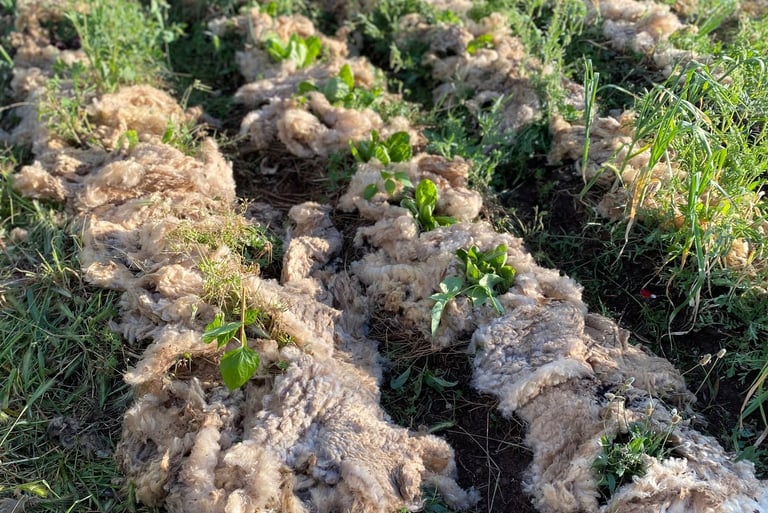
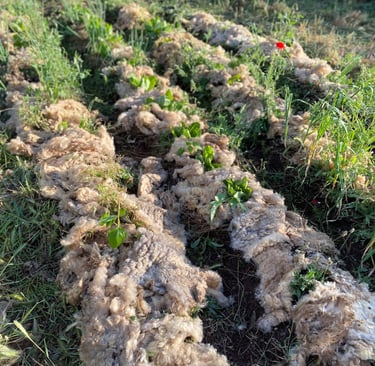
There is no universal solution. Every territory has its own topography, climate, land use history, and available resources. The most effective interventions are always those designed from within that context, using what the place already offers. A concrete example of this is the use of sheep wool in Mediterranean and temperate farming systems.
The outcome is not only water savings, it is also thermal regulation, greater resilience to drought, more biologically active soils, reduced dependency on external irrigation infrastructure, and a farm that, over time, becomes increasingly self-sufficient.
WOOL FOR SOIL PROTECTION
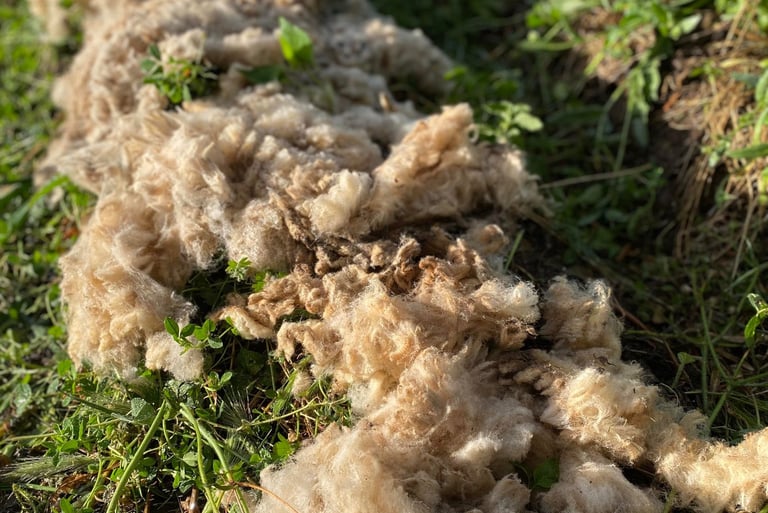
Wool fibre is composed primarily of keratin, a protein with high nitrogen and sulphur content. When incorporated into the soil, microorganisms break it down slowly, releasing those nutrients gradually over months without the leaching peaks associated with synthetic fertilisers. It is, in essence, a slow-release nitrogen fertiliser produced by the sheep itself.
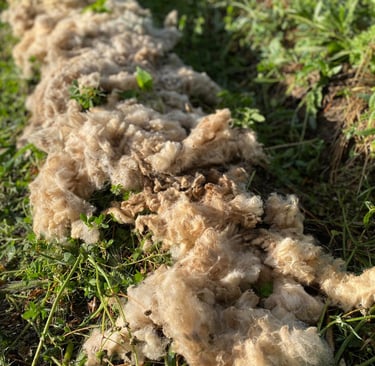
But its contribution does not stop there. Wool can absorb up to thirty times its own weight in water. Applied as a surface covering, whether raw, as pellets, or as filling in planting trenches. It acts as a small water reservoir that releases moisture toward the roots when the soil needs it, reducing irrigation frequency and protecting the soil from direct evaporation, rainfall impact, and extreme thermal fluctuations.
In the temperate farming systems of Switzerland and the Alpine foothills, where spring rainfall can be intense and summer drought is increasingly common, wool mulch offers a particularly well-adapted solution, one that connects local livestock production with soil regeneration in the same gesture.
COMPOST
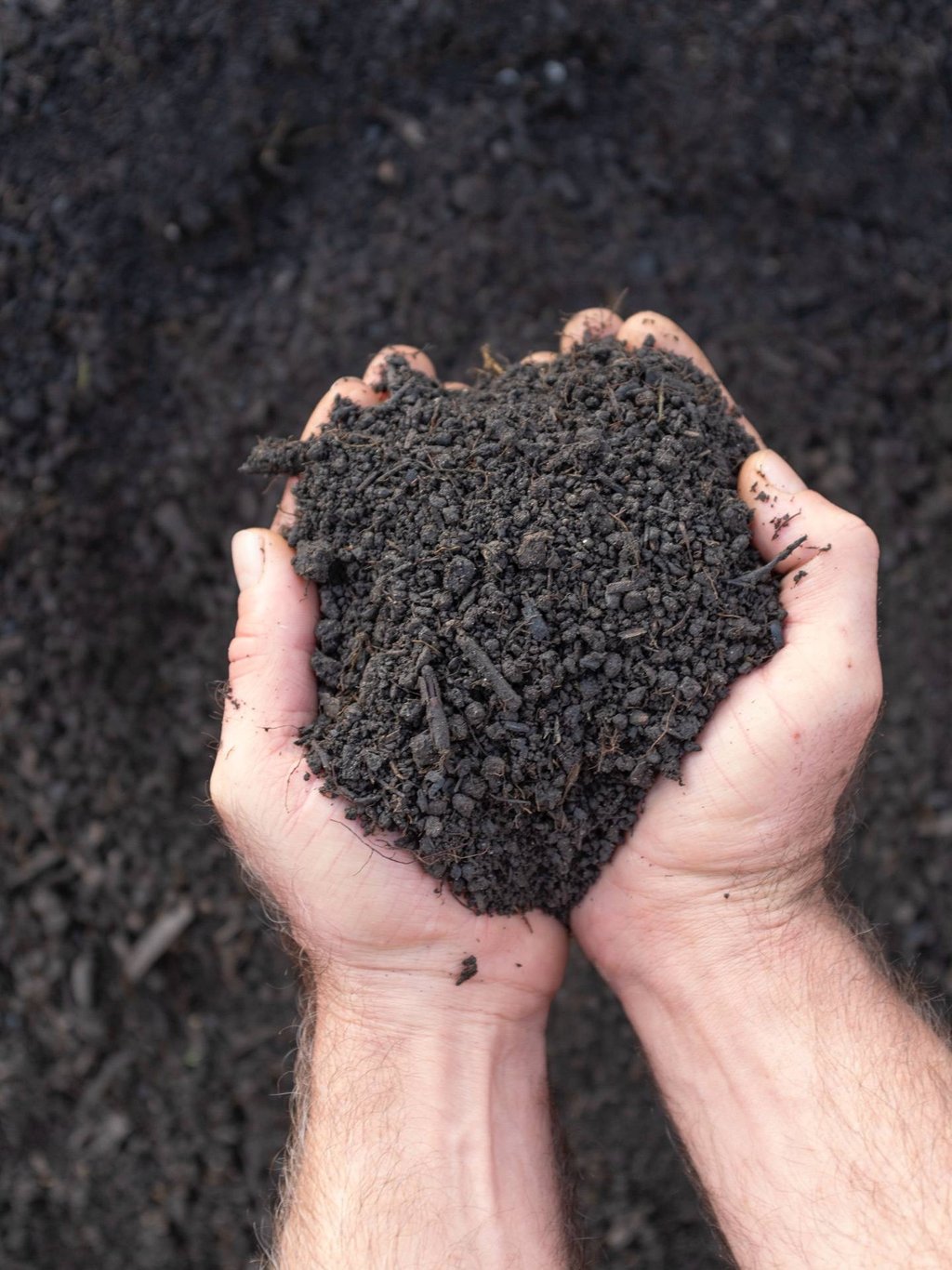
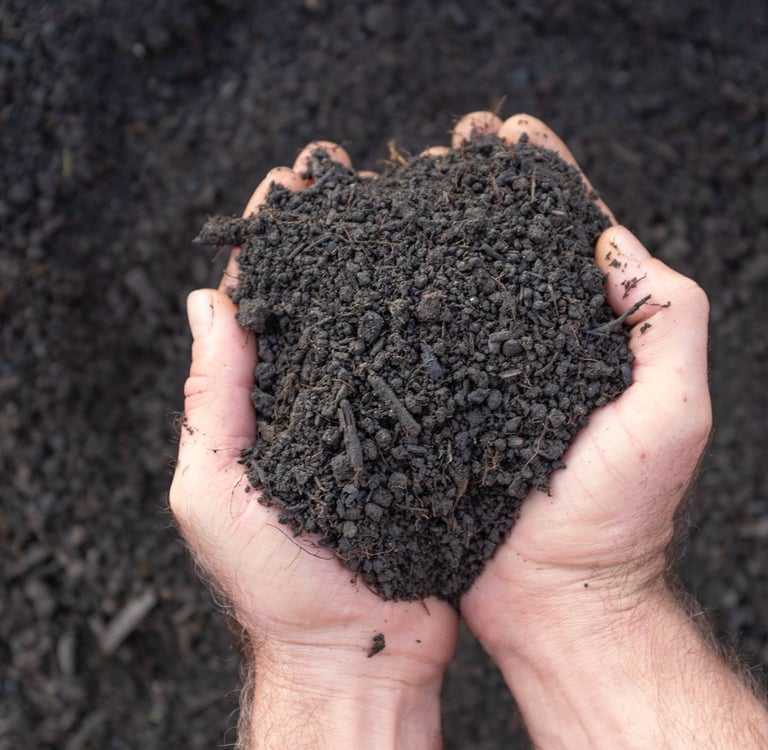
Composting is an aerobic bio-oxidation process of heterogeneous organic substrates in solid state, carried out by microbial communities — bacteria, actinomycetes, and fungi — that metabolise organic matter. The process unfolds in two phases: an active thermophilic phase (45–70°C), where the rapid and intense degradation of labile compounds such as sugars, proteins, and hemicelluloses takes place, followed by a mesophilic maturation phase dominated by humification, and the polymerisation of phenolic and nitrogenous compounds into stable, high molecular weight humic structures.
The final product is a stabilised organic material with a C:N ratio between 10:1 and 15:1, pH between 6.5 and 8.0, and low residual microbial activity. The resulting humic fraction — humic acids, fulvic acids, and humins — is responsible for the positive effects on soil structure, cation exchange capacity, and water retention.
The critical control parameters are the initial C:N ratio (optimal 30:1), moisture content (50–60%), free air porosity (>30%), and particle size (1–5 cm).
RAMIAL CHIPPED WOOD
Ramial Chipped Wood (RCW) is an organic amendment produced from the chipping of young broadleaf tree branches with a diameter of less than 7 cm. These young branches — particularly those under 7 cm — concentrate the most metabolically active tissues of the tree: phloem, cambium, and living sapwood. The wood contains cellulose, hemicellulose, lignin, amino acids, enzymes, carbohydrates, phytohormones, and other compounds that serve as food for soil organisms, which transform these substances into simpler forms and trigger the process of soil formation.
The process that RCW initiates in the soil is fundamentally mycological. RCW is particularly well suited to colonisation by basidiomycete fungi, which transform it by transferring nutrients into the microbial biomass and contribute to the depolymerisation of young lignin. This pathway leads to the formation of humus, humic and fulvic acids, the very foundation of pedogenesis and the construction of soil food webs.
In syntropic farming systems, RCW is not a byproduct, it is a design output. Pruning events are planned not only to manage plant succession but to produce the right quality and quantity of chipped material to feed the soil at each stage of the system's development.
ORGANIC MULCHING
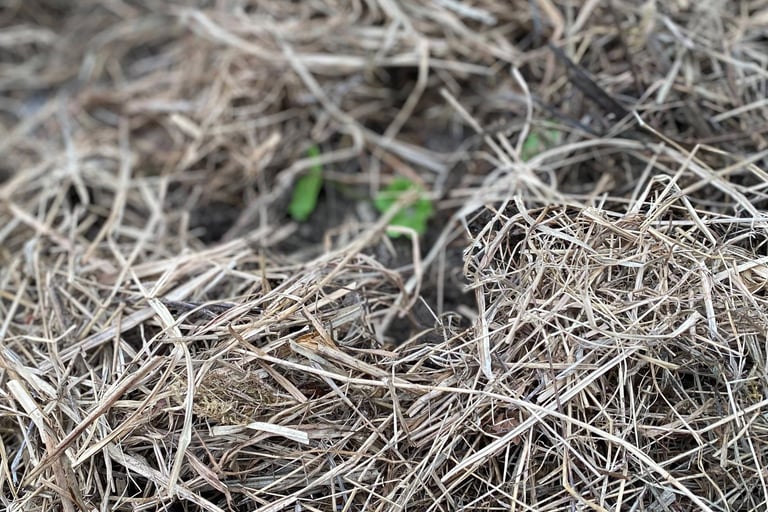
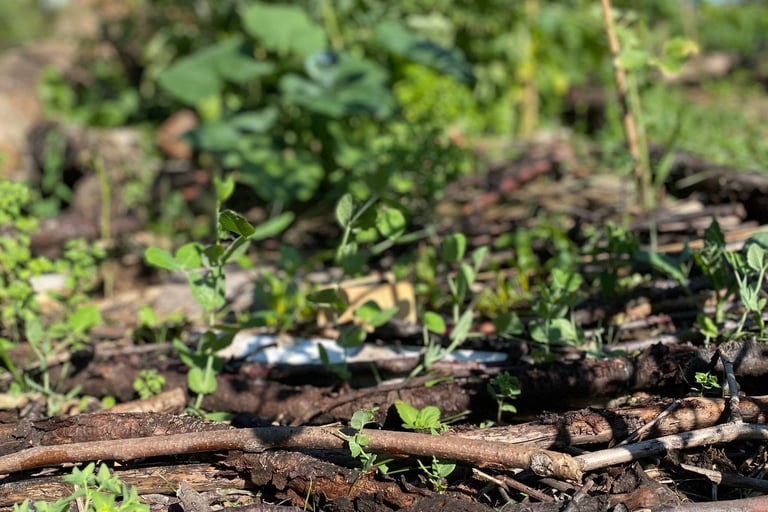
Mulching is the practice of covering the soil surface with a layer of organic material — straw, shredded pruning residues, dry leaves, hay, semi-mature compost, seed husks, or harvest residues. Its effect on water retention is the most immediately measurable. The mulch layer acts as a physical barrier between the soil surface and the atmosphere, limiting direct exposure to solar radiation and wind — the two primary drivers of evaporation. Organic mulching has been shown to reduce evaporation by between 28 and 58%, while controlling soil temperature and improving soil moisture content by between 4.6 and 22%.
Beyond water, mulching suppresses unwanted plant competition, moderates soil temperature extremes, and feeds soil biology as it slowly decomposes — making it one of the highest-return practices available to any farmer beginning an agroecological transition.